
Blog
How Mobile App Localization Works in Gaming Worldwide


When a mobile game launches internationally, the first impression can make or break it. Players don’t just read words; they feel them. A stiff phrase, a joke that doesn’t land, or clunky instructions can turn excitement into frustration. That first experience often decides whether they stick around or uninstall. This is where mobile app translation services truly matter; it’s what helps a game thrive beyond its home market.
Real Value of Language, Not Just Words
Language in games functions beyond letter changes, as it creates a space that enables players to discover their own identity through familiar elements. The absence of a cultural background creates an emptiness in games that attempt to replicate textual content. The beginning of communication exists through words. Games develop their distinctiveness through players’ understanding of local customs, regional humor, cultural symbols, and social restrictions. Simple dialogue choices often determine what feels acceptable versus offensive.
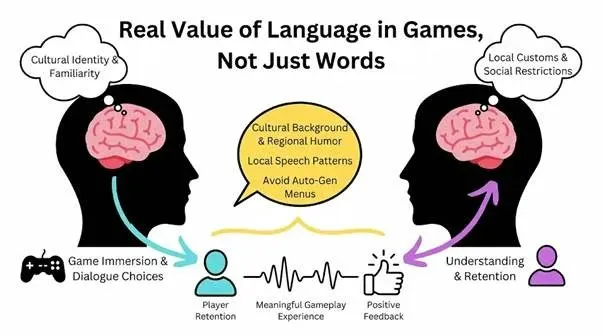
Players from Southeast Asia and the Middle East market pay attention to every single aspect of gameplay. Auto-generated menus create an unappealing user experience, which results in declined user interest and subsequent negative feedback. Games achieve better player retention through their ability to adapt dialogues and menus according to local speech patterns.
Fixing the UI Puzzle, One Language at a Time
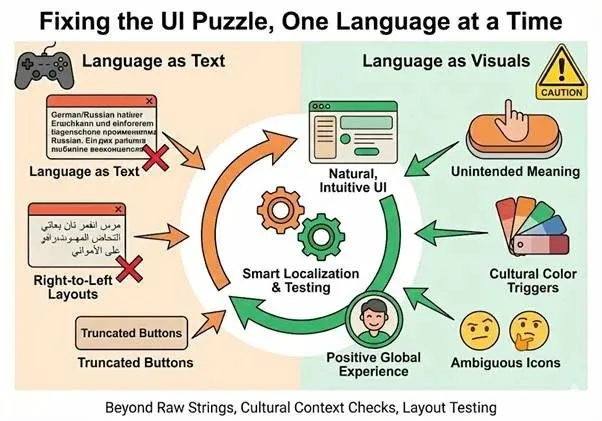
Some languages need more room than others. German or Russian often overflow text boxes designed for English. Arabic requires right-to-left layouts. Without early planning, localization becomes a patchwork of overflowing menus and truncated buttons that frustrate players.
Then there are things players rarely talk about until they encounter icons, emojis, and visual symbols that mean one thing in one culture and something else across the globe. A celebratory gesture on a button, playful icons, and even color choices can trigger reactions developers never anticipated. Designers who think beyond raw strings for translation, those who test layouts and integrate cultural context checks, end up with experiences that feel natural to every eye.
When Cultural Insight Becomes Competitive Advantage
Some games succeed internationally because they go beyond simple translation. They adapt in-game events, story pacing, and cultural references for local audiences. Seasonal festivals match regional holidays, quests feel meaningful, and voiceovers often feature native actors with familiar accents.
These changes aren’t cosmetic; they reflect how players actually behave. In India, the sport references, slang, or even the pacing of audio cues matter. In parts of the Middle East, certain visuals and character outfits needed adjustments so that respect for local norms wasn’t lost. Players don’t write articles about “good translation”; they just play longer, spend more, and recommend the game to friends. That quiet but steady impact is the true measure.
Going Beyond Simple Translation
Many developers confuse translation with localization. Localization goes further; it adds context and cultural nuance and adapts the experience to how players in different regions think and feel. Without that second layer, games can slip into cultural disconnects, awkward humor, or instructions that just don’t click for users new to the experience.
That’s exactly why so many studios now work with specialists. A reliable video game translation agency brings more than language fluency. It brings context awareness and experience, shaping narratives that should live in another world yet make sense in every language. This isn’t just semantics; it’s the difference between a confused player and an engaged one.
And yes, there’s a technical side too. Payment systems vary wildly across markets. Local players expect payment options they use every day, not something unfamiliar that demands extra setup or a new credit card brand. Payment systems differ across markets. Players expect familiar options, not extra steps or unfamiliar cards. Ignoring this creates friction at the point of purchase and costs revenue.
Why Planning Ahead Pays Dividends
The process of successful localization starts its execution through its beginning phase. Language planning should begin from the project’s initial stage because this approach helps teams prevent their desperate need to fix mistakes through expensive rewriting work. Translators use style guides together with context notes and clear strings to create the game’s voice through their work, which goes beyond simple word replacement. They develop the narrative voice while keeping it consistent across languages and cultures that a game presents to its audience.
The process of receiving feedback from the community reaches its highest point at this specific location. Native speakers should participate in beta testing together with local player groups because their involvement will help identify awkward phrases and cultural misfires before the product reaches its million-download point. The implementation of that feedback loop into the launch strategy will convert a disorganized Western rollout into a seamless international introduction.
Conclusion
Games are stories and experiences. Keeping them in one language or culture limits their reach. Translation and localization help players worldwide feel connected. A joke that lands in one language can completely miss the mark in another.
Localization is an art, and it takes time. It makes games a communal experience that transcends continents. And that, for developers and players alike, is the point of why mobile games have become so seamless across cultures.
Make your game feel local everywhere. MarsTranslation delivers seamless, culturally aware gameplay menus, humor, voiceovers, and more. Connect with us and let your game speak every language like a native.