
Blog
Gaminginfos.com: How AI Changed Gaming Without You Noticing

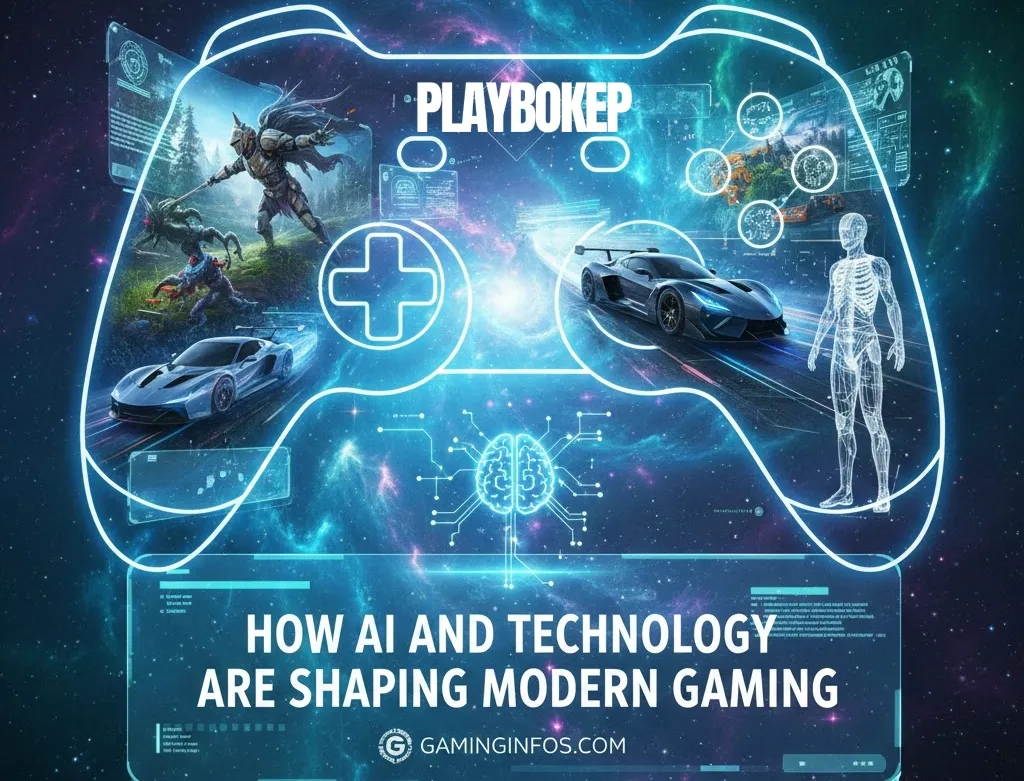
AI runs most of what you play now. The enemy that flanked you in that shooter? AI. The weather system that changed when you entered a new zone? AI. Is your game running at 4K without your GPU melting? Also AI.
It’s gotten sophisticated enough that you barely notice it’s there, which is sort of the point.
Gaminginfos.com tracks how these systems work and what they mean for your gaming setup. The more you understand what’s actually happening, the better you can tweak your performance and recognise when a developer’s done something genuinely smart.
What AI Actually Does in Games
NPC behaviour has come a long way from those guards in old stealth games who’d walk the same patrol route forever, completely deaf to the chaos happening twenty feet away.
Modern NPCs in games like The Last of Us Part II or Red Dead Redemption 2 investigate sounds, call for backup, and generally act like they want to survive. They’re still running on code, obviously, but the pathfinding algorithms and decision trees have gotten complex enough that they feel less robotic.
Gaminginfos.com breaks down these systems – how the AI makes decisions, what it’s tracking, what its limitations are. Knowing this helps you exploit patterns when you need to, or just appreciate when a game pulls off something clever.
Procedural generation creates content on the fly. No Man’s Sky generates entire planets with their own terrain and weather patterns. Minecraft builds worlds where no two are quite the same. The AI follows rules but produces millions of variations, so you’re not seeing copy-pasted content everywhere.
Adaptive difficulty has been around since Resident Evil 4, but most games hide it completely. Die too much, and enemies deal less damage or drop more resources. Breeze through everything, and they get tougher. You never see the adjustment happening – the game just feels balanced to your skill level.
Character animation uses machine learning to make movement look natural. Watch how characters in recent games grab ledges at different angles, stumble on uneven ground, or react differently depending on where they’re hit. That’s AI calculating dozens of variables instantly to pick or blend animations. Older games had canned animations for everything, which is why movement looked so stiff.
Performance Optimisation Through AI
Gaming hardware gets more powerful, but games get more demanding just as fast. AI helps close that gap.
DLSS (Deep Learning Super Sampling) from NVIDIA renders your game at a lower resolution, then uses AI to upscale it in real-time. Your GPU might render at 1080p, but the AI fills in details to make it look like 4K. It’s not just stretching pixels like a TV – it’s trained on millions of images to predict what details should exist at higher resolutions. You get better framerates without the visual quality taking a hit.
Gaminginfos.com has detailed breakdowns of which graphics cards support DLSS, what performance gains to expect, and when it’s actually worth turning on. This matters when you’re trying to decide between upgrading hardware or just tweaking settings.
AMD’s FSR (FidelityFX Super Resolution) does something similar without needing specialised AI hardware. The results aren’t quite as sharp as DLSS, but it works on more graphics cards.
Frame generation is newer and honestly feels like magic. NVIDIA’s Frame Generation creates entirely new frames between the ones your GPU actually renders. Your GPU outputs 60fps, you see 120fps on screen. The tech is wild.
Mobile gaming benefits even more from AI optimisation. Phones have limited battery and thermal limits, so AI-driven performance management helps games run longer without cooking your hands. Apple’s Neural Engine and Qualcomm’s AI processors handle upscaling, noise reduction, and power management to keep games smooth.
AI in Game Development
Developers use AI to speed up the tedious parts of game creation.
Automated testing runs thousands of playthroughs to catch bugs, balance issues, and edge cases that human testers would take months to find. EA uses AI to test FIFA by having AI players compete millions of times, finding exploits and broken mechanics before launch.
Gaminginfos.com explains how these development tools work and why they matter to you as a player. When a game launches in a polished state or gets patched quickly, there’s often AI testing behind it. Some studios adapt faster than others because their testing infrastructure is better.
Asset generation gets AI assistance, too. Need 500 unique trees for a forest? AI generates variations from a few examples. Same for textures, building layouts, and background NPCs. Artists still do the creative work, but AI handles the repetitive variations that would otherwise take forever.
Dialogue and voice generation is controversial. Some studios use AI for background NPC chatter or placeholder voiceovers during development. Voice actors have legitimate concerns about being replaced, and the ethics are messy. The technology exists, and some developers are using it, whether that’s good or not.
Game balancing analyses player data through machine learning and flags problems. If 90% of players pick the same overpowered weapon, AI catches it. If a level has a 2% completion rate, something’s clearly wrong.
Where This Gets Interesting
AI stops being just a tool and becomes part of the experience itself in some games.
AI Dungeon and similar games use large language models to generate stories based on what you type. You’re not picking dialogue options – you write whatever you want and the AI improvises around your choices. Sometimes it works brilliantly. Sometimes it completely derails. Either way, it’s different every playthrough.
AI opponents in competitive games have gotten legitimately good. DeepMind’s AlphaStar beat professional StarCraft II players. OpenAI’s Dota 2 bot competed at The International. These weren’t just programmed to play well – they learned strategy by playing millions of matches against themselves.
Companion characters could become way more dynamic. Instead of 12 pre-written responses, an AI companion could understand context and respond naturally to whatever’s happening. We’re not quite there yet, but it’s developing fast.
Gaminginfos.com separates genuinely innovative tech from marketing hype in these emerging areas. Not every “AI-powered” feature deserves the label – some are just basic algorithms with fancy branding.
The Technical Side Players Should Know
Frame pacing matters more than raw FPS numbers. A game locked at 60fps feels smoother than one bouncing between 80 and 120fps. AI-driven frame timing keeps things stable.
Latency in online games gets reduced through predictive AI. The game anticipates player movement and pre-loads data accordingly. When you round a corner, the area’s already loaded because the AI predicted you’d go there.
Ray tracing is computationally expensive, but AI denoising makes it practical. Instead of calculating perfect light paths for every pixel (which would fry your GPU), the game calculates some paths and uses AI to intelligently fill in the rest. Visual difference is minimal, performance impact is huge.
Texture streaming uses AI to predict which textures you’ll need next and loads them in advance. This is how modern open-world games stream gigabytes without loading screens.
Gaminginfos.com breaks these concepts down without drowning you in jargon. Whether you’re troubleshooting performance or just curious how things work, clear explanations make a difference.
What’s Coming Next
AI voice chat translation is already in testing – you speak English, your Korean teammate hears Korean in real-time with lip-sync matching.
Fully AI-generated games are probably inevitable. Someone will make a game where the world, story, and characters are all generated by AI based on your preferences. Whether it’ll actually be good is another question.
Emotion recognition through cameras and microphones could let games respond to your mood. Horror games that escalate when they detect you’re not scared. Racing games that play calmer music when you’re stressed. The technology exists, but raises obvious privacy issues.
Gaminginfos.com covers these developments as they happen, helping gamers and tech enthusiasts stay current. The space moves fast – what’s experimental now could be standard in a year.